

Key Takeaways for Investors:
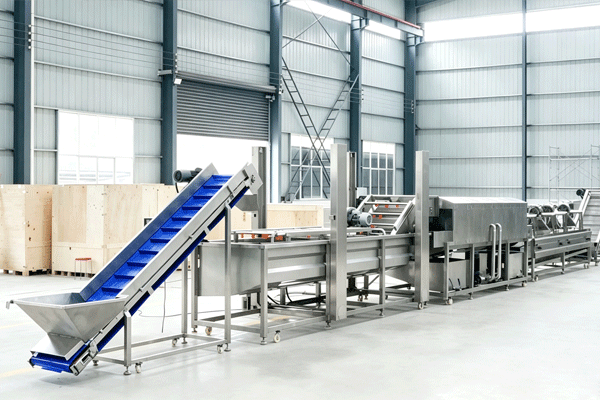
Setting up an automated ginger washing and processing plant in Thailand requires overcoming two main hurdles: clearing heavy field mud and preventing mold growth in tropical weather. Joyshine engineers customized ginger washing lines specifically for Thai processors and exporters, helping turn raw ginger into standardized, export-ready batches that meet strict quality standards in Japan, the Middle East, and Europe.
Thai fresh ginger features intricate branching and tight crevices packed with sticky clay. To clean and pre-treat raw ginger efficiently without skin damage, our processing line follows four essential steps:
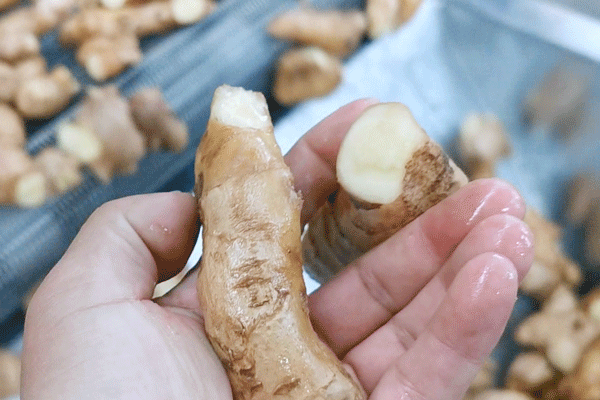
High-pressure air bubbles generate powerful water turbulence to dislodge sticky soil embedded deep inside ginger joints. It removes mud thoroughly while keeping the skin damage rate below 2%, preserving the flawless appearance required for fresh export.
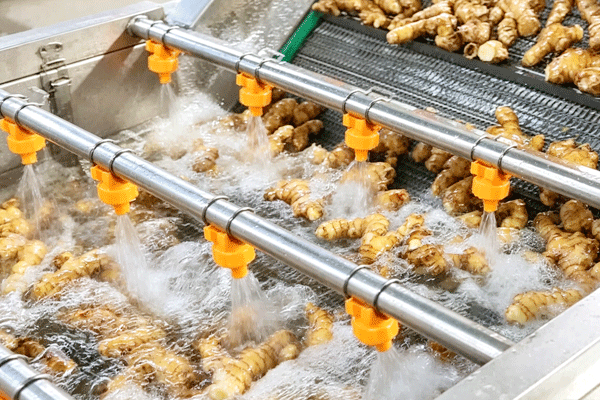
As ginger travels along the mesh belt, continuous high-pressure clean water nozzles deliver a final rinse. This flushes away fine sand and remaining residue, ensuring full compliance with international phytosanitary and food safety standards.
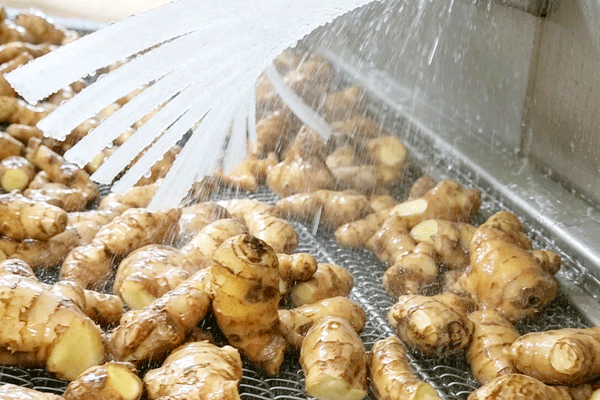
Multiple sets of high-velocity air knives blow away surface moisture continuously. Designed specifically for Thailand's hot and humid tropical climate, rapid surface drying cuts off the environment for mold growth, preventing decay during long-distance ocean transit.
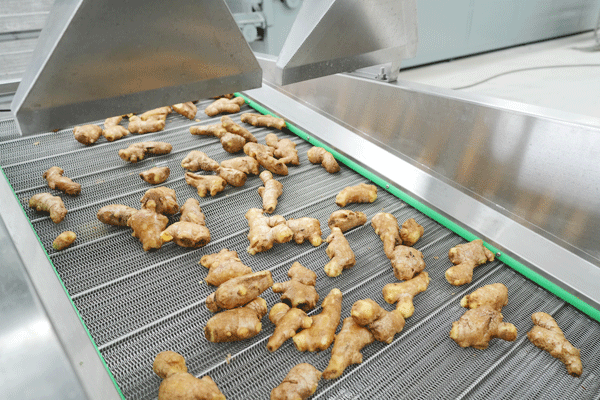
Washed ginger moves onto an ergonomic sorting belt where operators remove defective hands and categorize ginger by size or weight (e.g., <100g, 100–250g, >250g). This gentle handling prevents bruising irregular ginger branches while meeting strict export specifications.
 、
、
When planning your factory layout and choosing equipment in Thailand, focus on three practical operational factors:
Q1: How much factory space is required to install a 2-ton/hour ginger washing line in Thailand?
A: A standard primary processing line (washing, drying, and grading) measures roughly 15 to 20 meters in length. We recommend reserving at least 150–200 square meters of workshop space for smooth raw material storage, packing, and finished product movement.
Q2: Thai raw ginger carries heavy mud. How does the line control daily water consumption?
A: The line features a multi-stage sedimentation and filtration water tank that recycles most of the washing water. Fresh water is only used during the final high-pressure spray step, saving over 60% in water costs compared to traditional continuous flow-through washing.
Joyshine delivers comprehensive end-to-end support, from factory space layout and pre-shipment live testing videos to remote installation guidance. Additionally, this primary washing line connects seamlessly with downstream equipment like roller peelers, centrifugal slicers, and mesh belt drying/milling units for future expansion into ginger slices and powder production.